PromptReel Lab · Guides
AI UGC-style ads without faking customers: what's allowed and what isn't
AI can now make a convincing "customer holding your product" photo in seconds. That's useful, and it's also exactly where brands get into trouble. Here's how I think about the line. Practical guidance, not legal advice: platform rules change, so check them before you run ads.
The rule: an AI person is not a customer
Don't give an AI person a name, a star rating or a "I've used this for 3 months" caption. Presenting a synthetic person as a real reviewer is a fake testimonial, whatever tool made it.
What's fine
- Hook frames and thumbnails in a UGC style, clearly labelled as AI.
- Styled scenes showing the product in use, with neutral, factual copy.
- Testing angles cheaply before briefing a real creator.
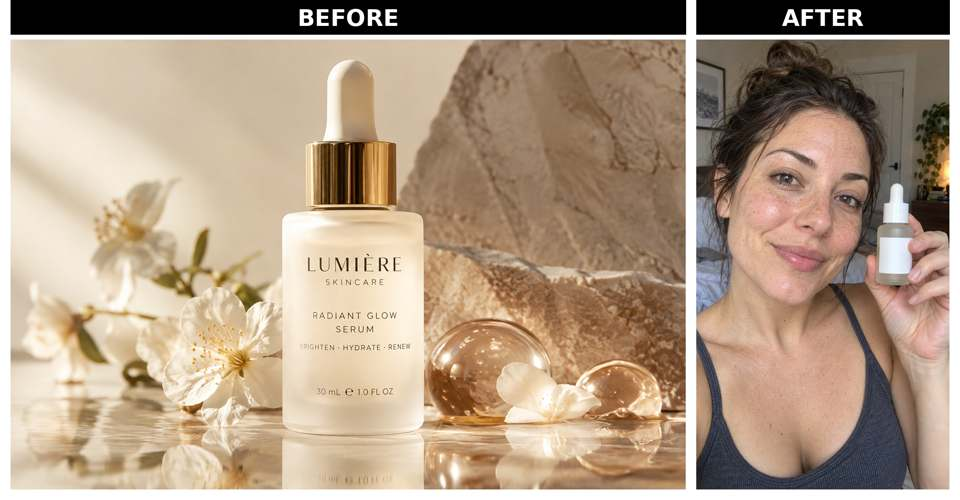
Label it
- Meta labels some AI content and asks advertisers to disclose digitally created or altered realistic content in certain ad categories. Use the AI disclosure option when Ads Manager offers it.
- TikTok asks creators to label realistic AI-generated content, and its ad policies restrict misleading synthetic media.
- YouTube requires disclosure of realistic altered or synthetic content.
When in doubt, add "Images are AI-generated." It costs nothing.
Show the product you actually ship
Start from your real product photo and check every render for altered labels, sizes or included items. Misleading product imagery is a misleading claim.
Real testimonials stay real
Use real customer quotes, accurately, with permission. AI can design the frame around a real quote; it can't write the quote.
Try it free: the AI Product Ad Prompt Generator builds a photo-first prompt around your product, no login. The full kit (41 before/after recipes, hooks and scripts, and a 7-day workflow) is PromptReel Lab on Whop.
All example images are AI-generated in ChatGPT image generation from text descriptions of sample products. AI output varies between renders. No sales or performance claims.